Judgy AF: A Real-World Embroidery Design Review
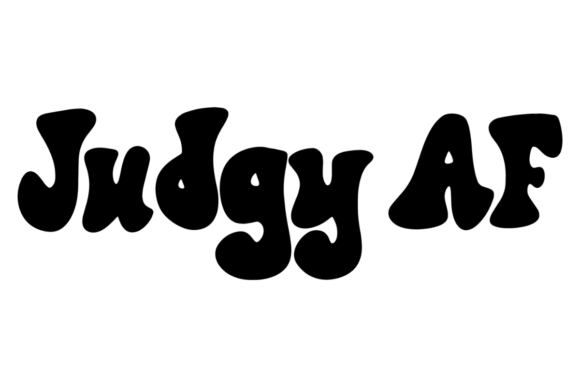
As a designer who has spent years turning digital files into tangible stitched goods, I approach every new machine embroidery design with a mix of excitement and skepticism. The market is flooded with generic clip art, so finding a piece that actually translates well from screen to fabric requires a critical eye. Today, I am evaluating the Judgy AF embroidery file. At first glance, it promises a sassy, humorous vibe with its trendy, bold retro groovy hand-lettered font. But does it hold up under the scrutiny of a real production run? Let's dive into how this Graphics asset performs when you move beyond the mockup and start stitching.
The First Impression: Retro Sarcasm Meets Stitch Logic
When I first loaded the Judgy AF design into my software, the visual personality was immediately apparent. It captures that specific "retro groovy" aesthetic that has been dominating social media feeds lately. The hand-lettered style gives it an organic, imperfect charm that feels more handmade than a rigid vector font ever could. For anyone running a craft business or selling on Etsy, this kind of character is gold. It signals personality before the customer even touches the item.
However, as a professional, my immediate concern is always the translation of curves and serifs into thread. Hand-lettered fonts often have varying stroke widths and tight corners. In Judgy AF, the flow seems generally smooth, but those tight loops in the "J" and the "A" are potential trouble spots if the stitch density isn't optimized. If the fill stitch is too dense, the fabric might pucker; too loose, and the retro vibe falls apart into gaps. This is a classic challenge with digital embroidery files that rely on stylistic flair rather than blocky simplicity.
A Real Project Scenario: The Custom Tote Bag Test
To truly understand the utility of this design, I imagined a specific project: creating a line of custom embroidered tote bags for a local boutique. These aren't just standard canvas bags; they are premium, heavy-weight cotton intended as personalized gifts or statement pieces for a craft fair. The goal is to place the Judgy AF text across the center of the bag, large enough to be read from a distance but not so large that it distorts the fabric.
In this scenario, the bold nature of the font works beautifully. On a sturdy tote bag, the fill stitch would likely sit flat, giving the text a crisp, graphic look. The humor of the phrase combined with the retro style makes it highly giftable. I can already see these bags flying off the shelves at a holiday market. Customers love items that make them laugh, and the "Judgy AF" sentiment is universally relatable. However, the success here hinges entirely on the hoop size. If the design is too wide for your hoop, you risk misalignment when re-hooping, which would ruin the continuous flow of the lettering.
Navigating Fabric Challenges and Placement
While a tote bag is a forgiving surface, the versatility of Judgy AF needs to be tested against trickier materials. Consider using this embroidery project on a sweatshirt. Sweatshirts have a looped texture that can sometimes swallow fine details. With a bold font like this, the risk is lower, but you must ensure the stabilizer is robust enough to prevent the knit from stretching during stitching. If you use a cheap cut-away stabilizer on a thick fleece, the letters might end up looking wavy and uneven once the backing is removed.
What about smaller applications? Could this work as an embroidered patch or on a cap? Here, caution is required. The intricate curves of the hand-lettered style might get lost if scaled down too small. Tiny lettering is the enemy of clarity in embroidery. If you attempt to shrink Judgy AF to fit a 4x4 inch hoop for a baby onesie or a hat, the satin stitch edges might become indistinct, and the internal fills could bunch up. I strongly advise against using this design on stretchy fabrics like jersey without a tear-away stabilizer and a test run on scrap material first.
Where to Be Careful
- Textured Fabrics: Heavy denim or chunky knits may obscure the finer details of the retro font.
- Dark Fabrics: While the design is bold, check the contrast. Lighter thread colors will pop better against dark backgrounds, but you may need more layers of fill to achieve opacity.
- Curved Surfaces: Caps require precise digitizing to handle the curve. Ensure the file accounts for the curvature to avoid puckering.
- Frequent Washing: Items like kitchen towels or aprons go through the wash often. Verify that the thread colors used in your production won't bleed or fade over time.
Impact on Brand Value and Customer Trust
For the Etsy seller or small shop owner, the quality of your finished product directly correlates to customer trust. A poorly executed commercial embroidery job can ruin a brand's reputation. The Judgy AF design, when done right, elevates a simple garment into a collectible item. The retro aesthetic suggests a curated taste, implying that the maker knows their trends. This adds perceived value to the handmade product.
However, if the stitching is messy, the joke lands flat. Imagine a customer buying a custom apparel item only to find the "F" in "AF" is misaligned or the threads are tangling. That negative experience is far worse than no purchase at all. Therefore, the design assets you choose must be reliable. Before committing to a bulk order, always create a printable mockup to visualize the scale, and then stitch a physical sample on the exact fabric you intend to sell.
Practical Designer Notes for Success
If you decide to integrate Judgy AF into your workflow, here are my top recommendations based on real-world application:
- Test on Scrap Fabric: Never skip this step. Stitch the design on a piece of the actual fabric you plan to use to check for puckering and alignment.
- Check Thread Contrast: The retro look relies on visibility. Test different thread colors to ensure the text stands out against the background.
- Review Stitch Density: Inspect the file settings. You may need to adjust the density manually depending on your machine and fabric weight.
- Confirm Hoop Size: Measure the bounding box of the digital embroidery file to ensure it fits your machine's capabilities without splitting the design.
- Licensing Check: Before selling finished products or offering this as a digital product yourself, confirm the licensing terms. Some files allow personal use only, while others permit commercial sales of finished goods.
- Use Proper Stabilizer: Whether it's a tote bag design or a delicate baby item, the right stabilizer is non-negotiable for a clean finish.
In conclusion, Judgy AF is a strong contender for designers looking to add humor and style to their portfolio. Its bold, retro groovy font offers a distinct look that separates it from generic options. However, like any Crafts project, its success depends on your execution. By respecting the limitations of the medium and testing thoroughly, you can turn this Graphics file into a profitable and popular addition to your shop. Whether it ends up on a holiday gift, a boutique sweatshirt, or a personalized apron, the key is to let the design breathe and ensure every stitch counts.