I’m Not Lazy, I’m on Energy-Saving Mode
First Impressions: A Playful Concept with Visual Charm
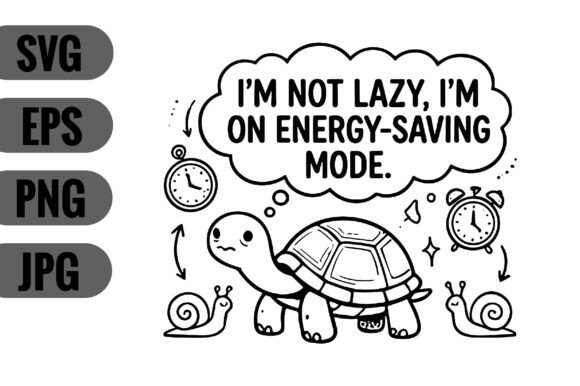
Opening the file for I’m Not Lazy, I’m on Energy-Saving Mode, the first thing that stands out is the lighthearted concept paired with a clean, whimsical layout. The central turtle character is drawn with soft curves and a relaxed posture, immediately conveying the theme of slow, intentional movement. Surrounding elements like clocks and snails reinforce the humor and relatability of the design. Visually, it’s not overly complex, which makes it approachable for both beginner and experienced embroiderers.
The design’s personality leans toward casual and cheerful, perfect for projects that aim to spark a smile or resonate with someone who appreciates a bit of self-deprecating humor. It’s not just a design—it’s a conversation starter. The balance between detail and simplicity ensures it won’t feel cluttered when stitched out, which is a big plus when considering real-world embroidery applications.
Real-World Embroidery Use: Where This Design Shines
I recently tested this design on a custom embroidered tote bag for a client who wanted a gift for a friend recovering from burnout. The placement on the center front gave it a focal point feel without overwhelming the bag’s structure. The turtle’s rounded shape worked well with the tote’s flat surface, and the stitch lines held up cleanly even with a mid-range density setting.
- Custom apparel like sweatshirts and hoodies gave the design enough texture and space to stand out.
- On tea towels and pillow covers, the design added a touch of personality without looking too busy.
- For personalized gifts, the phrase itself made it feel thoughtful and tailored, even without adding a name or date.
- In small shop product lines, especially around the holidays, this design could easily become a bestseller on items like caps or baby onesies.
It also translated well into printable mockups, helping Etsy sellers and digital product creators show off variations in thread colors and fabric backgrounds without needing physical samples.
Where to Use It Carefully: Fabric and Fit Matter
While I’m Not Lazy, I’m on Energy-Saving Mode holds up well in many embroidery scenarios, there are a few situations where caution is needed. On thin or stretchy fabrics, the satin-stitched outlines can pucker if the stabilizer isn’t properly matched to the material. I found that using a lightweight cutaway stabilizer helped maintain shape and clarity, especially around the turtle’s shell and the clock hands.
When stitching on curved surfaces like caps, the design needs careful placement to avoid distortion. The corners of the layout—particularly the outer snail and clock elements—can get lost if the hoop is too tight or the cap’s curve compresses the stitch density.
Dark fabrics also require attention. The light thread colors used in the original design may need to be adjusted for visibility. Testing on a black and white mockup before stitching helps preview how the contrast will look on different backgrounds.
Visual Appeal and Practical Value: More Than Just Cute
This design does more than look good—it enhances the perceived value of the finished product. The playful phrase and cute turtle create an emotional hook, which is essential for handmade product sellers aiming to connect with buyers on a personal level. It’s the kind of design that people will recognize and remember, which builds brand consistency if used across multiple items in a product line.
From a professional standpoint, it adds a touch of professionalism to custom orders without being too formal. It reads as fun and approachable, making it a good fit for boutique branding, craft fair products, or even Etsy listings where personality and storytelling play a big role in buyer engagement.
It also has strong giftability—the kind of design that says, “I see you and your sense of humor.” That’s a powerful selling point in today’s handmade market, where customers are looking for items that feel personal and expressive.
Designer Notes: What to Check Before Stitching
Before using this design in a client project or commercial product, here are a few practical checks to run:
- Test on scrap fabric first, especially if you’re using a new stabilizer or thread combination.
- Check thread color contrast on both light and dark backgrounds—some of the lighter elements may disappear on darker fabrics.
- Review stitch density in the fill areas, especially around the turtle’s shell and the clock face.
- Confirm hoop size matches your machine and the intended placement area on the garment or item.
- Inspect small details like the snail shells and clock hands to make sure they’re stitched clearly and not getting lost in the fabric texture.
- Use proper stabilizer depending on fabric type—cutaway for stretchy materials, tear-away for stable cottons.
- Confirm licensing if you plan to sell finished items or include this in a digital product bundle.
Final Thoughts: A Versatile Addition to Your Design Library
I’m Not Lazy, I’m on Energy-Saving Mode is a solid choice for designers and crafters looking for a design that’s both visually appealing and emotionally engaging. It performs well across a variety of embroidery projects and brings a level of charm that’s hard to manufacture. Whether you’re creating a custom embroidered patch, a personalized sweatshirt embroidery piece, or a batch of boutique craft business items, this design adds a touch of personality that customers will appreciate.
As with any machine embroidery design, a little preparation goes a long way. Take the time to test it out, adjust thread colors as needed, and ensure your stabilizer setup is correct. Once stitched, this design can elevate your finished product from ordinary to memorable.